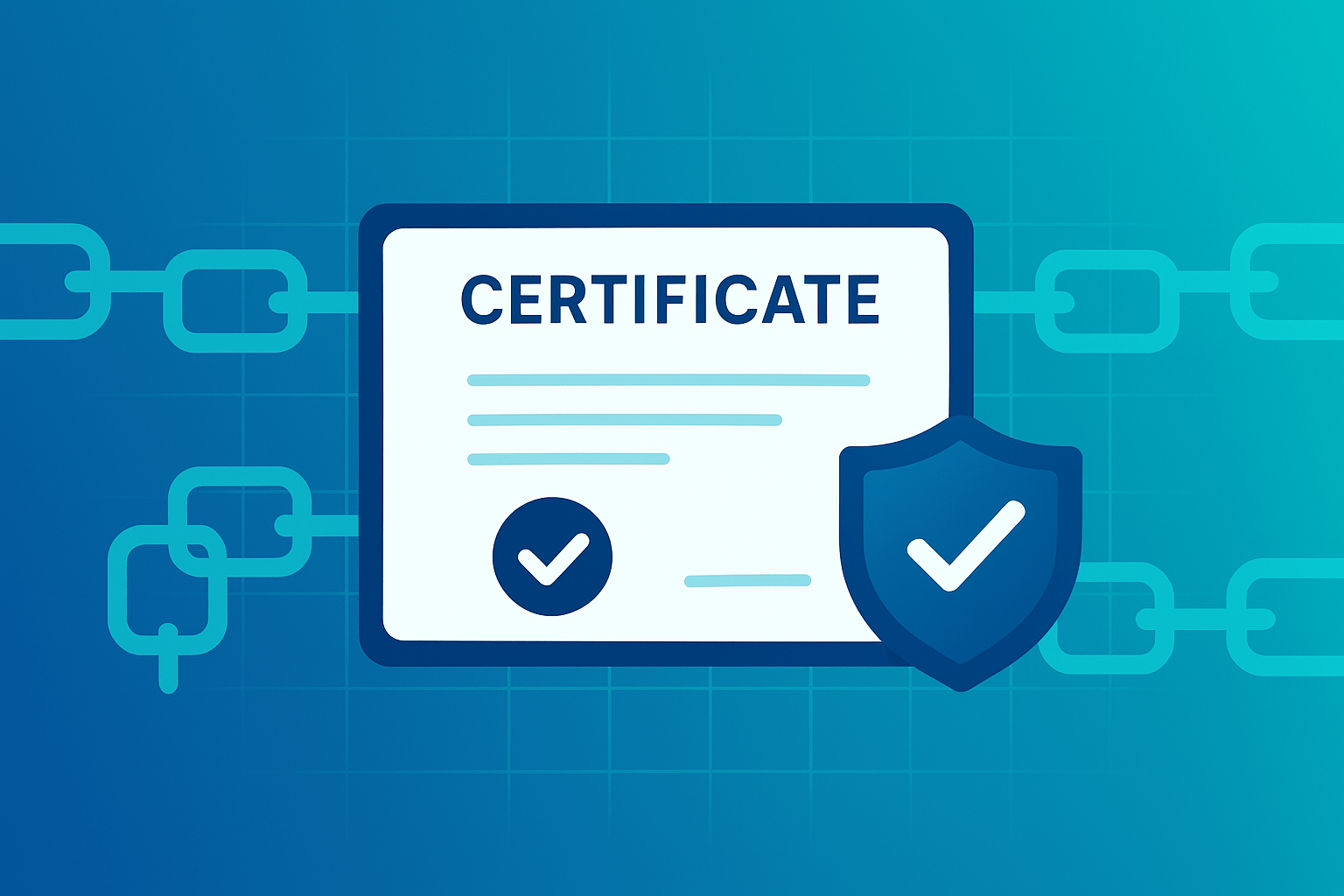
In the past, issuing and verifying digital certificates posed significant challenges due to fraud, lack of standardization, and complex verification processes. Traditional credentialing systems often rely on manual checks, centralized databases, and third-party validation, making them inefficient and vulnerable to manipulation.
Blockchain technology offers a powerful alternative. Through decentralization, cryptographic security, and transparency, blockchain can fundamentally transform how academic and professional certifications are issued, stored, and verified.
Certification systems today face persistent problems such as credential fraud, data breaches, and compromised record systems. Blockchain addresses these issues by enabling secure, tamper-proof credentials that can be verified globally without intermediaries.
How blockchain is revolutionizing online certification, the problems it solves, real-world implementations, and the challenges that still remain.
Problems with Traditional Certification Systems
Credential Fraud and Forgery
Conventional certification systems experience widespread fraud, including fake diplomas, forged degrees, and altered transcripts. Employers and institutions often struggle to validate credentials efficiently, leading to hiring risks and reputational damage. Blockchain introduces trust by allowing credentials to be verified through immutable, time-stamped transaction records.
Cumbersome and Costly Verification Processes
Manual verification of academic and professional records is time-consuming and expensive. Institutions and employers must contact issuing bodies directly, resulting in delays in recruitment, admissions, and licensing.
Security Risks from Centralized Record Storage
Most educational institutions store records in centralized databases, which are vulnerable to hacking, data loss, and unauthorized modification. A single breach can compromise the integrity of thousands of credentials.
Lack of Global Standardization
There is no universal framework for issuing and verifying certifications. Institutions follow independent processes, creating inefficiencies—especially for professionals seeking international employment or academic mobility.
How Blockchain Solves These Challenges
Immutable and Fraud-Resistant Credentials
Blockchain ensures immutability: once a certificate is issued, it cannot be altered or deleted. Each credential is encrypted, time-stamped, and assigned a unique cryptographic hash, making forgery virtually impossible. Institutions can issue blockchain-based degrees that employers can verify instantly.
Instant and Intermediary-Free Verification
Blockchain eliminates the need for third-party verification. Employers, universities, and licensing bodies can validate credentials directly. Verification can occur within seconds using digital identifiers such as QR codes.
Enhanced Privacy and Data Security
Decentralized ledgers reduce the risk of data tampering. Even if one node is compromised, the remaining network preserves data integrity. Public and private key cryptography ensures that only authorized parties can access credential information.
Interoperability and Global Recognition
Blockchain-based credentials can be verified across institutions and borders. Learners and professionals can carry universally verifiable credentials without facing bureaucratic delays or regional inconsistencies.
Support for Micro-Credentials and Lifelong Learning
Blockchain enables individuals to store all educational achievements—degrees, certifications, short courses, and professional training—in a single digital wallet. This supports lifelong learning and transparent skill validation.
Real-World Applications of Blockchain in Certification
Blockchain-Based Diplomas at MIT
MIT pioneered blockchain-issued diplomas using open standards, allowing graduates to independently share and verify credentials without third-party involvement.
IBM Learning Credential Network
IBM’s credential network enables organizations and educational institutions to issue, manage, and verify digital credentials securely on blockchain platforms.
University-Level Implementations
Several universities have adopted blockchain to issue tamper-proof diplomas, enabling students to share credentials globally with employers and institutions.
Government Initiatives
Countries such as Estonia and Malta have begun implementing blockchain for national education repositories, enhancing transparency, trust, and verification efficiency.
Challenges of Blockchain-Based Certification Systems
Institutional Resistance to Change
Many institutions hesitate to adopt blockchain due to limited awareness, perceived complexity, and the cost of transitioning existing systems.
Scalability and Performance Constraints
Blockchain networks must handle large volumes of credential data efficiently. Scalability solutions are essential for nationwide or global education systems.
Legal and Regulatory Uncertainty
Clear regulatory frameworks for blockchain-based credentials are still developing. International legal recognition remains a key challenge.
User Accessibility and Technical Barriers
Blockchain technology can appear complex to end users. Improved user interfaces and simplified onboarding processes are necessary to drive adoption.
Future Outlook for Blockchain in Certification
Integration with Artificial Intelligence
AI can analyze blockchain-based credential data to identify fraud patterns and optimize hiring and admissions processes.
Decentralized Education Marketplaces
Blockchain may enable decentralized platforms where learners earn, manage, and verify credentials from multiple providers.
Global Certification Standards
Efforts are underway to establish universal blockchain certification standards, enabling seamless cross-border recognition.
Automated Certification via Smart Contracts
Smart contracts can automatically issue credentials upon course completion, reducing human intervention and fraud risks.
Blockchain is reshaping the online certification ecosystem by delivering secure, tamper-proof, and instantly verifiable credentials. While adoption challenges remain, ongoing advancements in regulation, scalability, and usability are accelerating acceptance.
Embracing blockchain-based certification systems represents a significant step toward a more transparent, efficient, and trustworthy global credentialing framework—one that supports mobility, lifelong learning, and digital trust in the modern economy.