A Practical Guide to Building, Managing, and Scaling a Business Efficiently
Starting and running a business today is easier than ever—but also more competitive than ever.
Entrepreneurs are no longer limited by resources, teams, or capital. With the right set of tools, a single person can manage marketing, sales, operations, customer communication, and analytics from one place. However, the real challenge is not access to tools—it is choosing the right ones.
Many entrepreneurs waste time trying too many tools, switching constantly, or using complex systems they do not fully understand. The result is confusion, inefficiency, and slow growth.
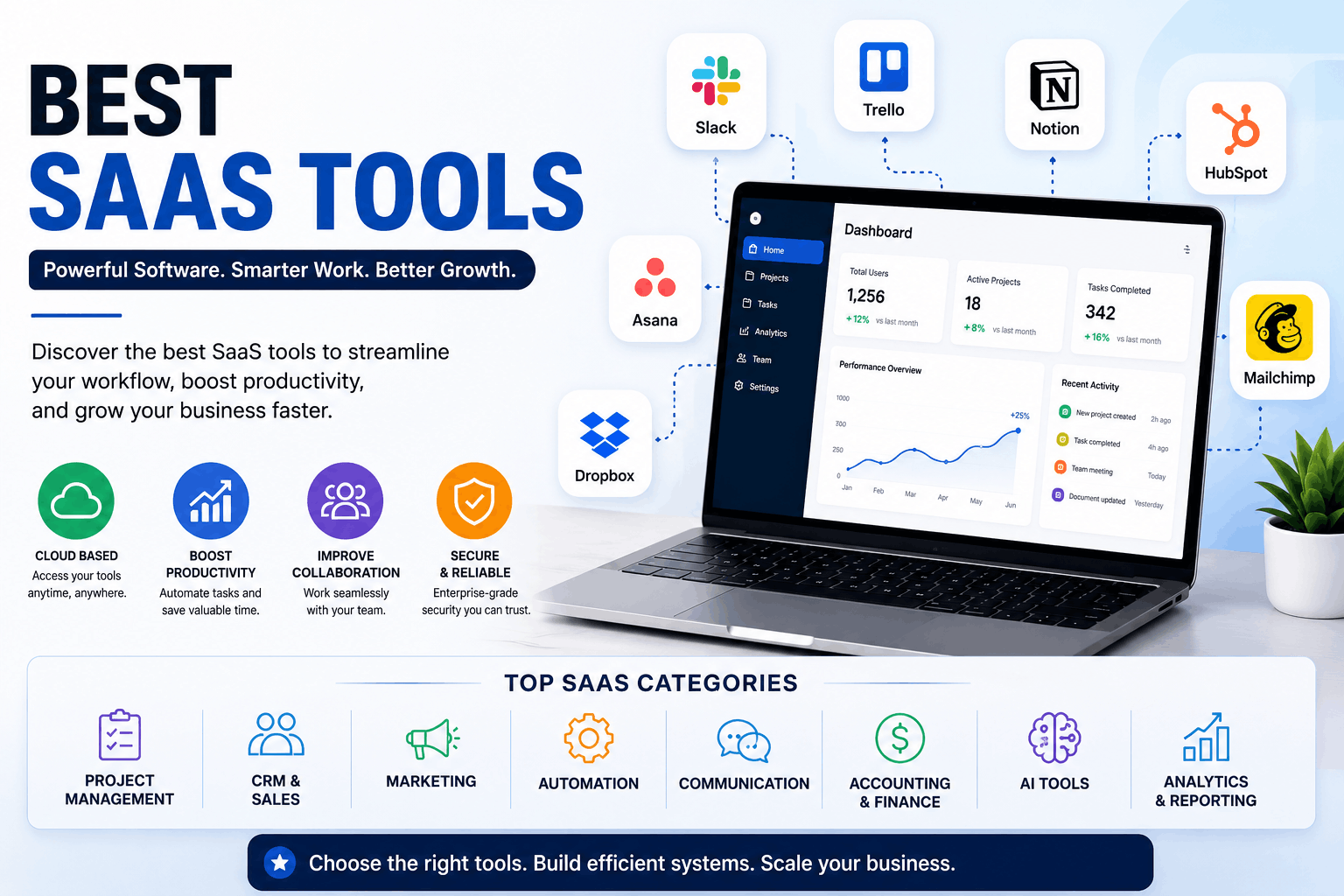
We focuse on the most essential tools for entrepreneurs, categorized by real business needs. Instead of listing hundreds of tools, this article explains how to build a simple, effective system that supports growth.
Why Entrepreneurs Need the Right Tools
Efficiency
The right tools reduce manual work and allow you to focus on high-impact tasks.
Scalability
Systems built with tools can grow with your business without increasing complexity.
Cost Control
Using tools wisely helps reduce hiring costs in early stages.
Better Decision Making
Analytics and data tools help you make informed decisions instead of guessing.
Categories of Tools Every Entrepreneur Needs
Business Planning Tools
What they do
Help you structure ideas, define goals, and track progress.
Examples of use
- creating business plans
- setting milestones
- tracking growth
Practical insight
Many entrepreneurs skip planning tools and jump directly into execution. This often leads to unclear direction and wasted effort.
Communication and Collaboration Tools
What they do
Help teams communicate and stay aligned.
Use cases
- team chat
- file sharing
- remote collaboration
Practical insight
Clear communication tools reduce confusion and improve productivity, especially for remote teams.
Project Management Tools
What they do
Help manage tasks, deadlines, and workflows.
Use cases
- assigning tasks
- tracking progress
- managing deadlines
Example
When launching a product:
- tasks are assigned
- deadlines are tracked
- progress is visible
Marketing Tools
What they do
Help attract, engage, and convert customers.
Use cases
- email marketing
- social media scheduling
- content planning
Practical insight
Marketing tools are essential for visibility. Without them, growth becomes inconsistent.
Sales and CRM Tools
What they do
Help manage leads and customer relationships.
Use cases
- tracking leads
- managing sales pipeline
- follow-ups
Practical insight
A simple CRM can significantly improve conversion rates by ensuring no lead is missed.
Financial Tools
What they do
Help manage money, expenses, and financial planning.
Use cases
- invoicing
- expense tracking
- budgeting
Automation Tools
What they do
Reduce repetitive tasks and improve efficiency.
Use cases
- automated emails
- workflow automation
- task automation
Internal connection
This directly relates to your Business Automation Guide, where you can expand on workflows and systems.
AI Tools for Entrepreneurs
What they do
Enhance productivity and decision-making.
Use cases
- content creation
- customer support
- data analysis
Practical insight
AI tools allow entrepreneurs to scale faster without increasing team size.
Website and SEO Tools
What they do
Help build and optimize your online presence.
Use cases
- website creation
- SEO optimization
- performance tracking
Internal connection
Links naturally with your Best SEO Tools for Beginners pillar page.

Solo Entrepreneur
- uses AI tools for content
- uses CRM for lead tracking
- uses automation for follow-ups
Startup Founder
- uses project management tools
- uses marketing tools for growth
- uses analytics tools for decisions
Small Business Owner
- uses automation tools
- uses financial tools
- uses customer support systems
How to Choose the Right Tools
Start Simple
Do not use too many tools at once.
Focus on Needs
Choose tools based on actual problems, not trends.
Test Before Scaling
Use free versions before upgrading.
Integrate Systems
Choose tools that can work together.
Common Mistakes Entrepreneurs Make
Using Too Many Tools
Leads to confusion and inefficiency.
Ignoring Integration
Disconnected tools create workflow issues.
Overcomplicating Systems
Simple systems are often more effective.
Not Reviewing Tools
Regular evaluation helps improve efficiency.
Internal Linking Opportunities
Add links to:
- Business Automation Guide
- Best AI Tools for Small Businesses
- Digital Marketing Trends 2026
- Best SEO Tools for Beginners
Final Thoughts
Tools do not build businesses—systems do.
The right tools, when used strategically, allow entrepreneurs to save time, reduce effort, and focus on growth. The goal is not to use more tools, but to use the right ones effectively.
By building a simple and connected system, entrepreneurs can manage operations efficiently and scale without unnecessary complexity.