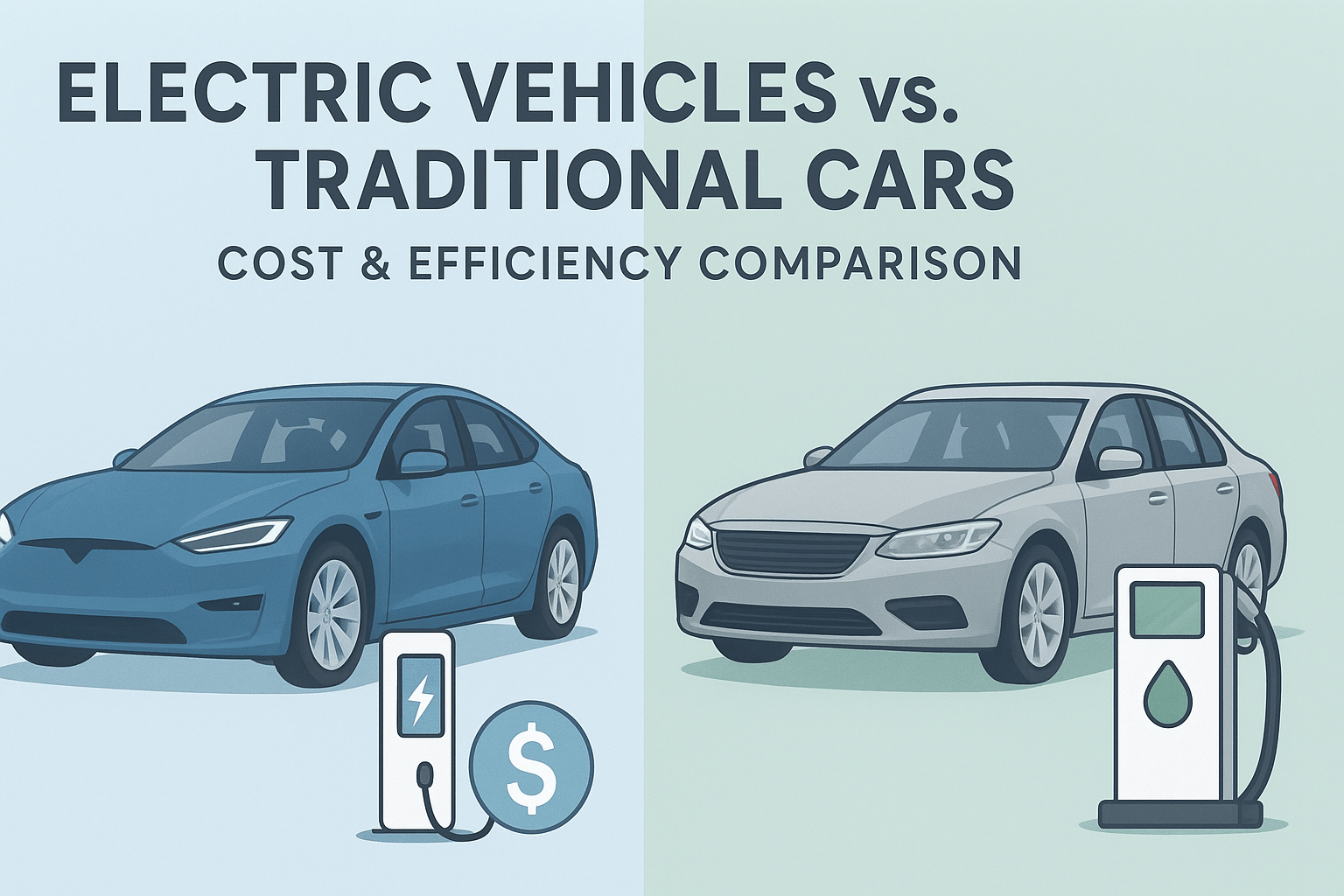
Electric Vehicles vs. Traditional Cars: Cost, Efficiency, and Long-Term Value
The automotive industry is undergoing a major transformation as electric vehicles (EVs) increasingly compete with traditional internal combustion engine (ICE) cars. With rapid technological progress, fluctuating fuel prices, and growing environmental concerns, consumers are carefully evaluating which option offers better value.
This article compares electric vehicles and traditional cars across key factors such as cost, efficiency, maintenance, and long-term ownership.
1. Upfront Costs: Electric Vehicles vs. Traditional Cars
Initial Purchase Price
Electric vehicles are generally more expensive upfront due to battery and advanced technology costs. However, prices continue to decline as production scales and technology improves.
Traditional gasoline cars usually have lower purchase prices, making them more accessible for buyers with tighter budgets.
Government Incentives
Many governments offer tax benefits, rebates, and reduced registration fees for electric vehicle buyers.
Traditional vehicles typically do not qualify for such incentives, which can narrow the price gap in regions that strongly support EV adoption.
2. Fuel and Energy Efficiency
Energy Consumption and Efficiency
Electric vehicles convert a large percentage of stored energy into motion, making them far more efficient.
Gasoline vehicles lose much of their energy as heat, resulting in lower overall efficiency.
Fueling and Charging Costs
Charging an electric vehicle is generally cheaper than purchasing gasoline, especially with home charging or off-peak electricity rates.
Fuel prices for gasoline vehicles are volatile and can significantly impact long-term ownership costs.
3. Maintenance and Repairs
Electric Vehicle Maintenance
Electric vehicles require less maintenance due to fewer mechanical components.
There are no oil changes, spark plugs, or exhaust systems to maintain, and regenerative braking extends brake life.
Traditional Car Maintenance
Gasoline vehicles require routine servicing, including oil changes, transmission maintenance, and exhaust repairs.
These mechanical complexities lead to higher long-term maintenance costs.
4. Battery Life and Vehicle Longevity
EV Battery Life
Most EV batteries last between eight and ten years and are backed by manufacturer warranties.
Battery replacement costs are steadily declining as technology advances.
Internal Combustion Engine Longevity
Traditional cars can operate for many years with proper maintenance.
However, major engine repairs or replacements can be costly and comparable to EV battery replacement expenses.
5. Environmental Impact
Carbon Emissions
Electric vehicles produce zero tailpipe emissions, significantly reducing air pollution.
Gasoline cars emit carbon dioxide and other pollutants that contribute to climate change.
Sustainability of Materials
EV batteries rely on materials such as lithium and nickel, with recycling initiatives improving over time.
Traditional vehicles depend heavily on fossil fuel extraction, which has long-term environmental consequences.
6. Charging vs. Fueling Infrastructure
EV Charging Availability
Public charging networks are expanding rapidly, and fast-charging stations are reducing downtime.
Home charging offers convenience but requires initial installation.
Gasoline Fueling Network
Gas stations remain widely available, allowing quick refueling with minimal planning.
Traditional vehicles do not face charging delays or range concerns.
7. Total Cost of Ownership
Although electric vehicles may cost more initially, they often prove cheaper over time due to lower fuel and maintenance expenses.
Gasoline cars may appear affordable at purchase but tend to incur higher running costs over their lifetime.
8. Future Trends and Market Growth
Electric Vehicle Market Expansion
Automakers are heavily investing in EV development, and many governments have announced plans to phase out gasoline vehicles.
Hybrid Vehicles as a Transition Option
Hybrid cars combine electric and gasoline power, offering a practical solution in areas with limited charging infrastructure.
Both electric vehicles and traditional gasoline cars have strengths and limitations. While traditional cars provide familiarity and convenience, electric vehicles offer superior efficiency, lower long-term costs, and environmental benefits.
As technology continues to advance and charging infrastructure expands, electric vehicles are expected to play a dominant role in the future of transportation.