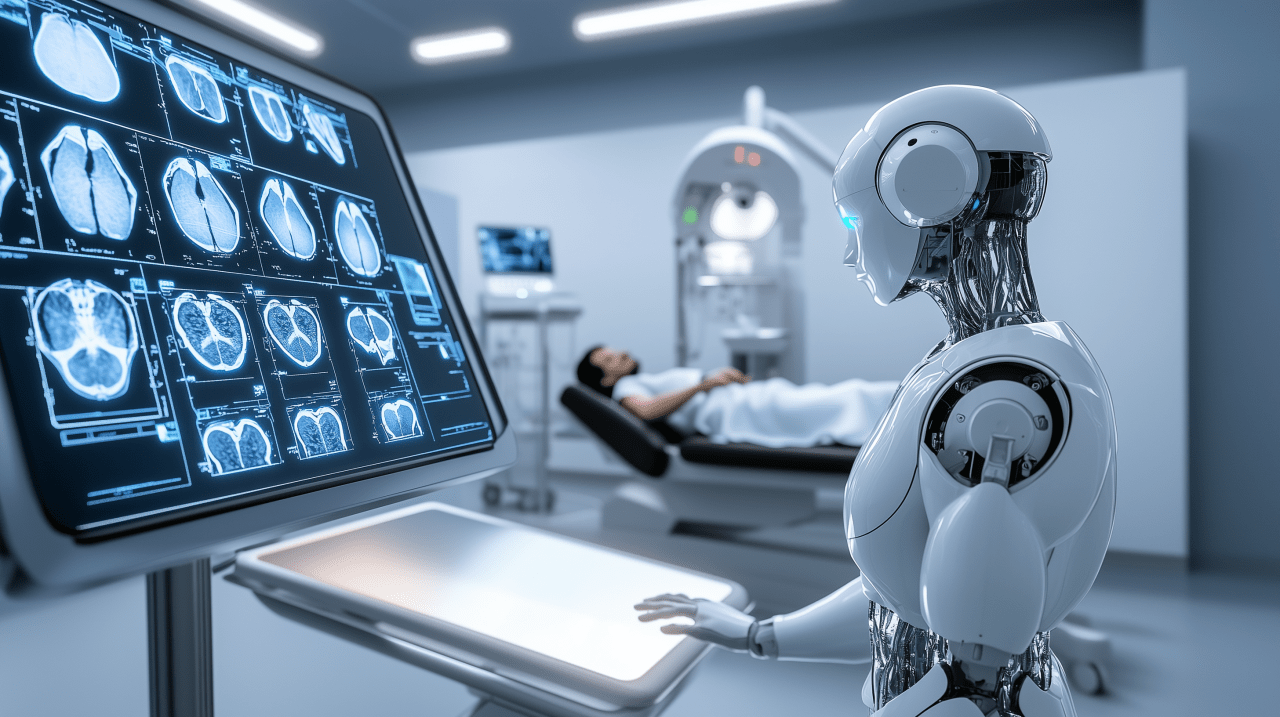
AI in Healthcare: Transforming Diagnosis, Treatment, and Patient Care
The healthcare sector is one of the biggest beneficiaries of artificial intelligence. Over the past decade, AI has moved from being an experimental concept to becoming an essential part of modern medical practice. Areas such as diagnosis, treatment planning, patient care, and hospital administration have all seen measurable improvements.
Technologies like predictive analytics and robotic surgery were once considered futuristic, but AI has brought them into everyday healthcare. By analyzing vast amounts of medical data, AI helps improve diagnostic accuracy, personalize treatment plans, and reduce the burden of administrative tasks. This article explores the growing role of AI in healthcare, its benefits, challenges, and what the future holds for AI-driven medicine.
AI in Healthcare:
AI in healthcare relies on technologies such as machine learning, deep learning, natural language processing, and robotics. These tools support healthcare professionals by automating routine tasks, processing complex datasets, and offering data-driven insights.
Applications of AI span across:
Disease diagnosis
Precision and personalized medicine
Robotic-assisted surgeries
Administrative and operational healthcare tasks
AI in Diagnosis
One of the most impactful uses of AI in medicine is diagnostic support. Traditional diagnostic processes are time-consuming and often dependent on individual expertise, which can lead to variability in outcomes. AI addresses these limitations by offering objective, data-based analysis that improves both speed and accuracy.
Medical Imaging and Radiology
AI has transformed how X-rays, MRIs, CT scans, and ultrasounds are analyzed. Trained AI models can detect tumors, fractures, infections, and abnormalities with high precision. In some cases, AI systems have matched or exceeded the diagnostic accuracy of experienced clinicians.
Early Disease Detection
AI can identify early warning signs of diseases long before symptoms become visible. Predictive models help detect conditions such as cancer and neurological disorders at an early stage, enabling timely intervention and better treatment outcomes.
Pathology and Laboratory Testing
In pathology, AI improves the analysis of biopsy samples by quickly identifying abnormal cells and reducing diagnostic errors. Digital pathology systems assist pathologists by highlighting areas of concern and accelerating report generation.
AI in Treatment: Enhancing Patient Care
AI is also changing how treatments are planned and delivered, making healthcare safer, faster, and more personalized.
Personalized Treatment Plans
AI-driven precision medicine tailors treatments based on a patient’s genetic profile, lifestyle, and medical history. This approach is particularly valuable in cancer treatment, where targeted therapies improve effectiveness and reduce side effects.
Robotic-Assisted Surgeries
AI-powered surgical systems assist doctors in performing complex procedures with greater accuracy. These systems help minimize surgical incisions, reduce recovery time, and improve patient outcomes in fields such as cardiac, neurological, and orthopedic surgery.
Drug Discovery and Development
AI accelerates drug discovery by predicting drug interactions, identifying promising compounds, and optimizing clinical trials. This reduces development time and lowers research costs.
Automated Patient Assistance
AI-based chatbots and virtual health assistants support patient care by handling appointment scheduling, symptom assessment, and basic medical guidance. These tools reduce the workload on healthcare staff while improving patient accessibility.
Advantages of AI in Healthcare
Improved diagnostic accuracy and reduced human error
Faster data analysis and quicker diagnoses
Lower operational and administrative costs
Personalized treatment and improved patient outcomes
Greater access to healthcare through telemedicine and remote monitoring
Challenges and Ethical Concerns
Despite its benefits, AI in healthcare presents several concerns that must be addressed.
Data Privacy and Security
AI systems depend on large volumes of sensitive patient data, raising concerns about privacy and data protection. Compliance with healthcare data regulations is essential.
Bias and Fairness
AI models can inherit bias from training datasets, potentially leading to unequal healthcare outcomes. Ensuring diverse and representative data is critical.
Regulatory and Legal Issues
AI-powered medical tools must undergo rigorous testing and approval processes before being adopted in clinical practice.
System Compatibility
Many healthcare institutions still rely on outdated infrastructure, making AI integration complex and resource-intensive.
Human Judgment and Accountability
AI should support medical professionals, not replace them. Final clinical decisions must always remain in human hands.
The Future of AI in Healthcare
AI’s role in healthcare will continue to expand, driven by innovation and growing adoption.
Key developments include:
AI-powered wearables for preventive healthcare
Augmented reality-assisted surgeries
AI-based mental health support systems
Blockchain-enabled medical data security
AI-driven outbreak detection and pandemic preparedness
AI is reshaping healthcare by making diagnosis more accurate, treatments more personalized, and care more accessible. While challenges related to ethics, regulation, and data security remain, AI should be viewed as a powerful tool that complements human expertise.
With responsible implementation and continued innovation, AI has the potential to create a healthcare system that is more efficient, inclusive, and patient-centric. The future of medicine lies in collaboration between human intelligence and artificial intelligence—not replacement.