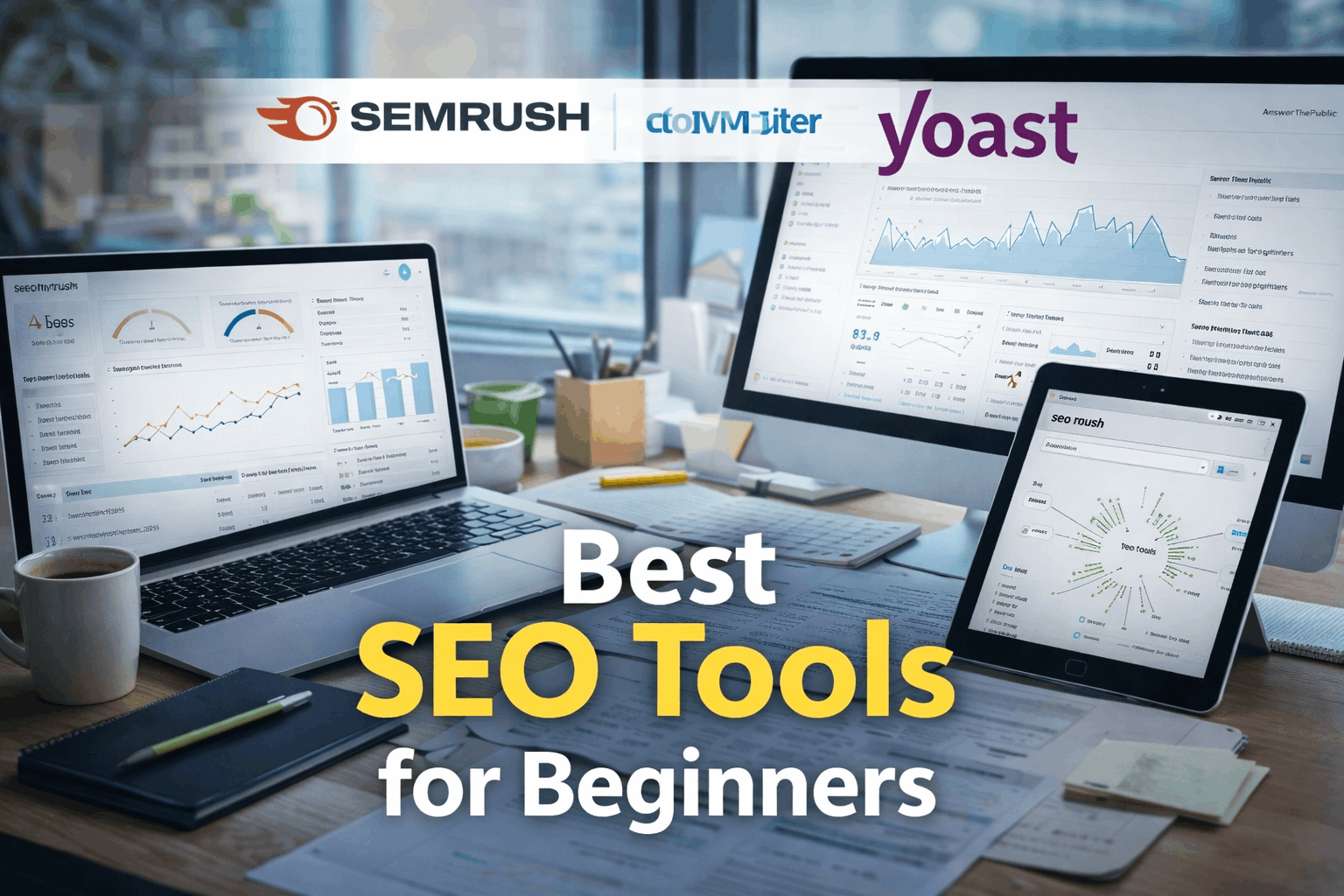
The 'Easy' SEO Tool Trap: 3 Mistakes That Will Kill Your Rankings, A Practical Guide to Start, Optimize, and Grow Your Website
Search Engine Optimization (SEO) is one of the most powerful ways to grow a website organically. Unlike paid advertising, SEO focuses on building long-term visibility by helping your content appear in search results when users are actively looking for information.
However, for beginners, SEO often feels overwhelming. There are too many tools, too many metrics, and too many strategies. Most people either overcomplicate it or use the wrong tools for their stage.
The truth is simple: beginners do not need dozens of tools. They need a small set of reliable, easy-to-use SEO tools that help them understand what to write, how to optimize it, and how to track performance.
In this guide, you will discover the best SEO tools for beginners, how to use them, and how they fit into a practical SEO workflow. This article also connects with broader topics such as your digital marketing and AI-driven strategies, making it part of a structured growth system.
sponsored ads
💡 Study Lamp
Crompton DeskJoy LED Table Lamp · Check the latest price on Amazon
Eye-care LED lamp designed to reduce strain during long content writing or keyword research sessions.
Why this works:
- Known brand (trust factor)
- Eye-care angle = strong emotional trigger
- Perfect for “late night SEO learning”
🎧 Headphones
JBL Tune 520BT Wireless Headphones · Check the latest price on Amazon
High-rated wireless headphones with strong sound clarity for distraction-free SEO work.
Why this works:
- JBL = trust + high reviews
- Focus angle = strong conversion
- Works well in “learning SEO” context
What Makes an SEO Tool Beginner-Friendly
Before choosing tools, it is important to understand what beginners actually need.
Simplicity
A good beginner tool should be easy to use without requiring advanced technical knowledge.
Clear Data
The tool should provide actionable insights, not just numbers.
Practical Use
It should help answer real questions like:
- What should I write?
- Which keywords should I target?
- Why is my page not ranking?
Affordable or Free Access
Beginners should start with free or low-cost tools before upgrading.
Types of SEO Tools You Should Know
Keyword Research Tools
Help you find what people are searching for.
On-Page SEO Tools
Help you optimize your content structure and keywords.
Technical SEO Tools
Help you identify site issues like speed, indexing, and errors.
Analytics Tools
Help you track traffic, rankings, and user behavior.
sponsored ads
💻 Laptop Stand
Portronics My Buddy K Lite Laptop Stand · Check the latest price on Amazon
Why this works:
- High rating + budget friendly
- Foldable (students love this)
- Strong CTR in India (Portronics brand works well)
Best SEO Tools for Beginners
1. Google Search Console
What it does
Google Search Console helps you understand how your website performs in search results.
Key features
- shows keywords your site ranks for
- tracks impressions and clicks
- identifies indexing issues
- submits sitemap
Practical example
You can see:
- which keywords bring traffic
- which pages are getting impressions but low clicks
Why beginners should use it
It is free and directly connected to Google’s data.
2. Google Analytics
What it does
Tracks website traffic and user behavior.
Key features
- number of visitors
- traffic sources
- user engagement
- page performance
Practical example
You can track:
- which blog posts are getting traffic
- how long users stay
3. Ubersuggest
What it does
Keyword research and SEO analysis tool.
Key features
- keyword ideas
- keyword difficulty
- competitor analysis
- content suggestions
Practical example
Search:
“AI tools for business”
Get:
- keyword ideas
- difficulty level
- content ideas
4. Ahrefs Webmaster Tools
What it does
Provides backlink data and SEO insights.
Key features
- site audit
- backlink analysis
- keyword tracking
Why useful
Helps beginners understand website authority.
5. SEMrush
What it does
All-in-one SEO and marketing tool.
Key features
- keyword research
- competitor analysis
- content ideas
- site audit
6. Yoast SEO / Rank Math
What it does
On-page SEO optimization inside WordPress.
Key features
- meta title optimization
- keyword usage
- readability analysis
- SEO score
Practical example
While writing an article, it guides:
- where to add keywords
- how to improve structure
7. AnswerThePublic
What it does
Finds real user questions.
Example
Search:
“SEO tools”
Get:
- what are SEO tools
- how to use SEO tools
- best SEO tools for beginners
Why important
Helps create content based on real search intent.
8. Screaming Frog (Basic Use)
What it does
Technical SEO analysis.
Key features
- broken links
- page errors
- redirects

Step 1: Keyword Research
Use:
- Ubersuggest
- AnswerThePublic
Find:
- low competition keywords
Step 2: Content Creation
Write content based on:
- user intent
- structured headings
Step 3: On-Page Optimization
Use:
- Yoast / Rank Math
Optimize:
- title
- meta description
- headings
Step 4: Publish and Index
Use:
- Google Search Console
Submit:
- URL
- sitemap
Step 5: Track Performance
Use:
- Google Analytics
- Search Console
Common Mistakes Beginners Make
Using Too Many Tools
Stick to 2–3 tools initially.
Ignoring Search Intent
Keyword alone is not enough.
Not Tracking Performance
Without data, you cannot improve.
Over-optimization
Keyword stuffing harms ranking.
Internal Linking Opportunities
Add links to:
- Best AI Tools for Small Businesses
- Digital Marketing Trends 2026
- Business Automation Guide
Conclusion...
SEO is not about tools. Tools only support strategy. For beginners, the focus should be:
- understanding keywords
- creating helpful content
- optimizing pages
- tracking results
Using the right tools in a simple workflow can help build consistent organic traffic over time.