What Businesses Need to Know to Stay Visible, Competitive, and Profitable
Digital marketing changes every year, but not every change matters equally. Some trends look exciting for a few months and disappear. Others quietly reshape how businesses attract attention, build trust, and generate sales. That is why businesses should not chase every new tactic they see online. They need to understand which digital marketing trends in 2026 are actually changing customer behavior and which ones are only creating noise.
This matters even more for small businesses, startups, bloggers, ecommerce brands, and service providers. Large companies can afford experimentation. Smaller teams usually cannot. If you have limited time, budget, and manpower, then every marketing decision has to be practical. You need trends that can improve visibility, reduce wasted effort, and support long-term growth.
In 2026, digital marketing is becoming more personal, more AI-assisted, and more performance-focused. Businesses are not just asking how to get traffic anymore. They are asking how to get the right traffic, keep attention longer, and turn interest into action. That shift is changing content, social media, email, SEO, automation, influencer campaigns, and even how websites are written.
This guide breaks down the most important digital marketing trends for 2026 in a way that is useful for real businesses. Instead of giving a random list, it explains what each trend means, why it matters, and where it can realistically fit into your strategy.
Why Digital Marketing in 2026 Feels Different
A few years ago, digital marketing was mostly about reach. Businesses wanted more impressions, more clicks, and more followers. In 2026, that approach is not enough. Reach still matters, but attention is harder to hold, audiences are more selective, and platforms are more crowded than ever.
People now move quickly between search, social media, short-form video, email, marketplaces, and messaging apps. They also expect content to feel relevant, useful, and trustworthy. Generic marketing is easier to ignore. Slow marketing is easier to forget. Businesses that win today usually do two things well:
- they understand audience intent more clearly
- they deliver the right message in the right format faster than before
This is why current marketing trends are less about one platform dominating everything and more about building connected systems across channels.
For example, a user might discover a brand through a short video, check reviews on social media, visit the website from search, join an email list, and only buy after receiving a personalized follow-up. That customer journey is more fragmented than before, which means businesses need more flexible strategies.
The Biggest Digital Marketing Trends in 2026
Below are the trends that matter most, especially for businesses that want practical growth.
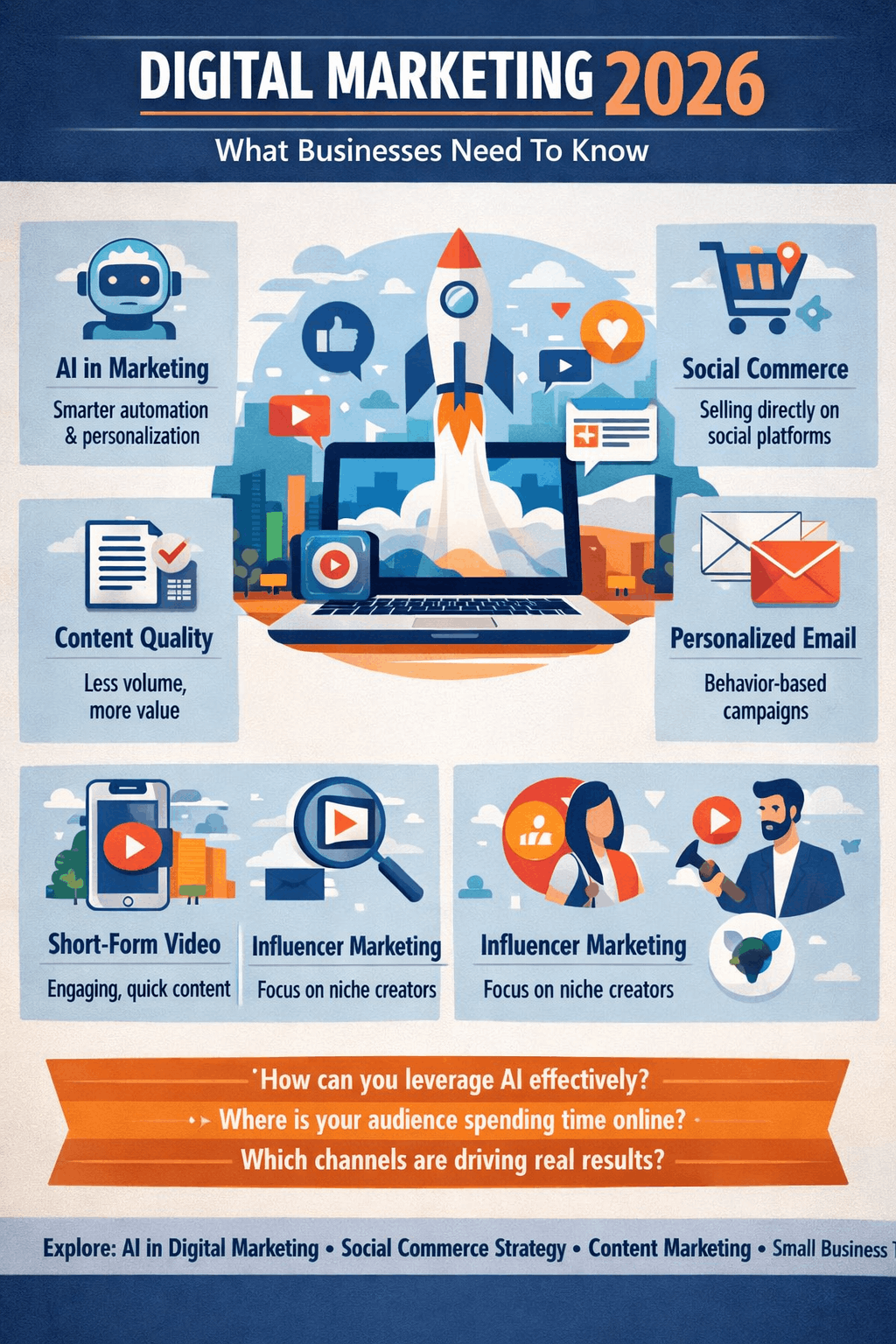
1. AI Is Becoming a Core Marketing Assistant, Not Just a Writing Tool
One of the biggest digital marketing trends in 2026 is the deeper use of AI across planning, content, personalization, automation, and performance analysis. Earlier, many businesses used AI only to generate text. Now the smarter use is broader and more strategic.
AI is helping marketers:
- generate content ideas based on audience intent
- improve ad copy variations
- segment users faster
- personalize email campaigns
- summarize customer feedback
- optimize workflows
- speed up research and planning
Practical example
A small ecommerce brand can use AI to:
- write first drafts for product descriptions
- create multiple ad angle variations
- segment customers by behavior
- personalize abandoned cart email copy
- turn customer reviews into content ideas
Why this trend matters
The value of AI is not in publishing raw AI content everywhere. The value is in reducing repetitive work so businesses can spend more time on strategy, brand messaging, customer understanding, and campaign improvement.
2. Search Is Expanding Beyond Traditional SEO
Search is still important, but the way people search is evolving. Users are no longer relying only on classic Google-style queries. They search through:
- search engines
- YouTube
- marketplaces
- AI tools
- social platforms
- voice inputs
- short-form video discovery
This means brands need content that can work across different discovery systems.
Practical insight
A business that only writes blog posts but ignores video snippets, visual explainers, and question-based content may lose visibility even if its website is well optimized.
Example
A fitness coach could publish:
- a blog post answering a detailed question
- short Instagram reels covering one quick point
- a YouTube short summarizing a myth
- an email follow-up with a clear call to action
The content topic stays similar, but the delivery format changes by platform.
3. Social Commerce Is Becoming a Stronger Sales Channel
Social media is no longer just for awareness. In 2026, more businesses are treating social platforms as direct selling environments. Users discover products, compare them, ask questions, and buy without the same long website journey that used to be standard.
What social commerce means
Social commerce includes:
- product discovery through creators
- direct shopping through social platforms
- short video product demonstrations
- UGC-style product validation
- DM-led or comment-led conversions
Practical example
A skincare brand may post:
- before-and-after style educational videos
- short “how to use” reels
- creator reviews
- customer results
- story-based product links
This creates a smoother path between discovery and conversion.
Why it matters
If your audience already spends time on social media, then treating social only as a posting platform is no longer enough. Businesses need a real social commerce strategy.
4. Content Quality Is Beating Content Volume
For years, many websites tried to win by publishing more and more articles. In 2026, content competition is too high for that approach alone. Businesses are finding better results when they focus on relevance, structure, and usefulness instead of pushing out endless thin content.
What good content now looks like
Strong content usually includes:
- clear search intent match
- practical examples
- updated information
- easy formatting
- comparison or decision support
- stronger introductions
- FAQs that answer real questions
Practical example
Instead of publishing a vague article like “Why Marketing Matters,” a business will perform better with a highly focused guide like:
- best email marketing tools for coaches
- how social commerce works for fashion brands
- AI in digital marketing for small business owners
5. Email Marketing Is Becoming More Personalized and Behavior-Based
Email is still one of the strongest marketing channels, but generic newsletters are losing effectiveness. In 2026, email campaigns that perform well are more segmented, more timely, and more behavior-aware.
What has changed
Businesses now use data and automation to send:
- welcome sequences
- cart reminders
- post-purchase follow-ups
- re-engagement campaigns
- educational nurture series
- product recommendation emails
Practical example
An online course creator may send:
- a welcome email after sign-up
- a follow-up email based on link clicks
- a reminder if checkout is abandoned
- a content email based on topic interest
Why it matters
This improves relevance and often leads to better open rates, click-through rates, and conversions than mass email blasts.
6. Short-Form Video Is Still Strong, but Strategy Matters More Than Frequency
Short-form video continues to influence attention, especially on social platforms. But the difference in 2026 is that simply posting often is not enough. Businesses need better messaging, better hooks, and better alignment with audience needs.
What works better now
- quick problem-solution videos
- myth-busting clips
- before-and-after transformations
- founder-led explainers
- mini tutorials
- customer proof and case-based content
Practical example
A digital service agency can create:
- 20-second videos explaining common marketing mistakes
- before-and-after landing page examples
- quick content tips from actual client patterns
Practical insight
The strongest short-form content often feels specific and useful, not overly polished. Clarity beats complexity.
7. Influencer Marketing Is Shifting Toward Relevance Over Reach
Influencer marketing is still growing, but businesses are becoming more careful. Instead of chasing large creators only for visibility, many brands are getting better results from niche creators with tighter audience trust.
Why this shift is happening
Large influencers may offer reach, but smaller or niche influencers often bring:
- stronger audience connection
- better conversion quality
- lower cost
- more natural product integration
Practical example
A local wellness brand may get better results from 5 local micro-influencers who genuinely use the product than from one large creator with broad but less relevant reach.
What businesses should focus on
- audience fit
- authenticity
- content style match
- conversion tracking
- long-term partnerships instead of one-off posts
8. First-Party Data Is Becoming More Important
Privacy changes and platform limitations have pushed more businesses to rely on data they collect themselves instead of depending fully on third-party platforms.
First-party data includes:
- email subscribers
- customer purchase history
- website behavior
- survey responses
- lead form submissions
- loyalty program actions
Why it matters
Businesses that build their own email list, customer database, and audience insights are less dependent on platform changes. This creates stronger long-term marketing stability.
Practical example
Instead of relying only on social media traffic, a business may offer a useful free resource, collect email sign-ups, and build a nurturing system from there.
This trend supports stronger email, content, and automation systems all at once.
9. Marketing Automation Is Moving From “Nice to Have” to Necessary
As customer journeys become more fragmented, manual marketing creates delays and inconsistency. More businesses in 2026 are using automation not just for convenience, but for survival.
Automation is commonly used for:
- lead capture follow-ups
- email workflows
- CRM task creation
- audience segmentation
- abandoned cart reminders
- onboarding processes
- re-engagement campaigns
Practical example
A software startup can automatically:
- send welcome emails after sign-up
- notify the sales team when a demo request comes in
- segment users by trial behavior
- trigger educational email sequences based on actions
Why it matters
Automation reduces delays, improves customer experience, and helps small teams scale without doing everything manually.
10. Small Businesses Are Competing Better With Focused Marketing Systems
One of the most encouraging digital marketing trends in 2026 is that small businesses can still compete effectively if they are more focused. They do not need to be everywhere. They need a system.
A strong small business system may include:
- one clear audience
- one strong offer
- one primary acquisition channel
- one trust-building content format
- one follow-up method
- one simple conversion path
Practical example
A local consultant may grow through:
- search-focused blog content
- LinkedIn thought leadership
- one free guide for lead capture
- automated follow-up emails
- a consultation booking page
This structured approach often performs better than trying to be active on every platform with no deeper system.
Knowing trends is useful only if they influence action. Most businesses do not need a complete strategy reset. They need focused adjustments.
Step 1: Review your current channels
Ask:
- where does your audience already discover you?
- which channel actually converts?
- what content gets real engagement?
Step 2: Improve one system at a time
Choose one of these:
- email personalization
- content quality upgrade
- automation setup
- social commerce content
- AI-assisted workflow improvement
Step 3: Build connected assets
Your blog, email list, landing pages, short-form content, and lead magnets should support one another instead of existing separately.
Step 4: Track what matters
Instead of only watching likes or impressions, monitor:
- lead quality
- click-through rates
- email sign-ups
- conversion rates
- return visitor behavior
- content-driven sales influence
Common Mistakes Businesses Should Avoid in 2026
Chasing every trend at once
Not every business needs every trend. Relevance matters more than speed.
Publishing raw AI content
AI can help execution, but human editing, clarity, and audience understanding still matter.
Ignoring email
Brands that depend only on platform reach are more vulnerable to algorithm changes.
Treating social media only as awareness
For many businesses, social now supports trust, conversion, and customer interaction too.
Choosing tools before strategy
A tool can improve a process, but it cannot create one from nothing.
Final Thoughts
The most important digital marketing trends in 2026 are not just about technology. They are about how technology, content, trust, and customer behavior now work together. Businesses that perform well are not necessarily the loudest or the biggest. They are the ones that create useful content, respond faster, personalize communication, build smarter systems, and stay focused on audience needs.
For many businesses, the next stage of growth will not come from doing more random marketing. It will come from doing fewer things more strategically. That may mean better email segmentation, stronger content quality, smarter AI support, clearer social commerce planning, or more useful automation.
The businesses that adapt well in 2026 will usually have one thing in common: they will treat digital marketing as a connected system, not a collection of disconnected tasks.