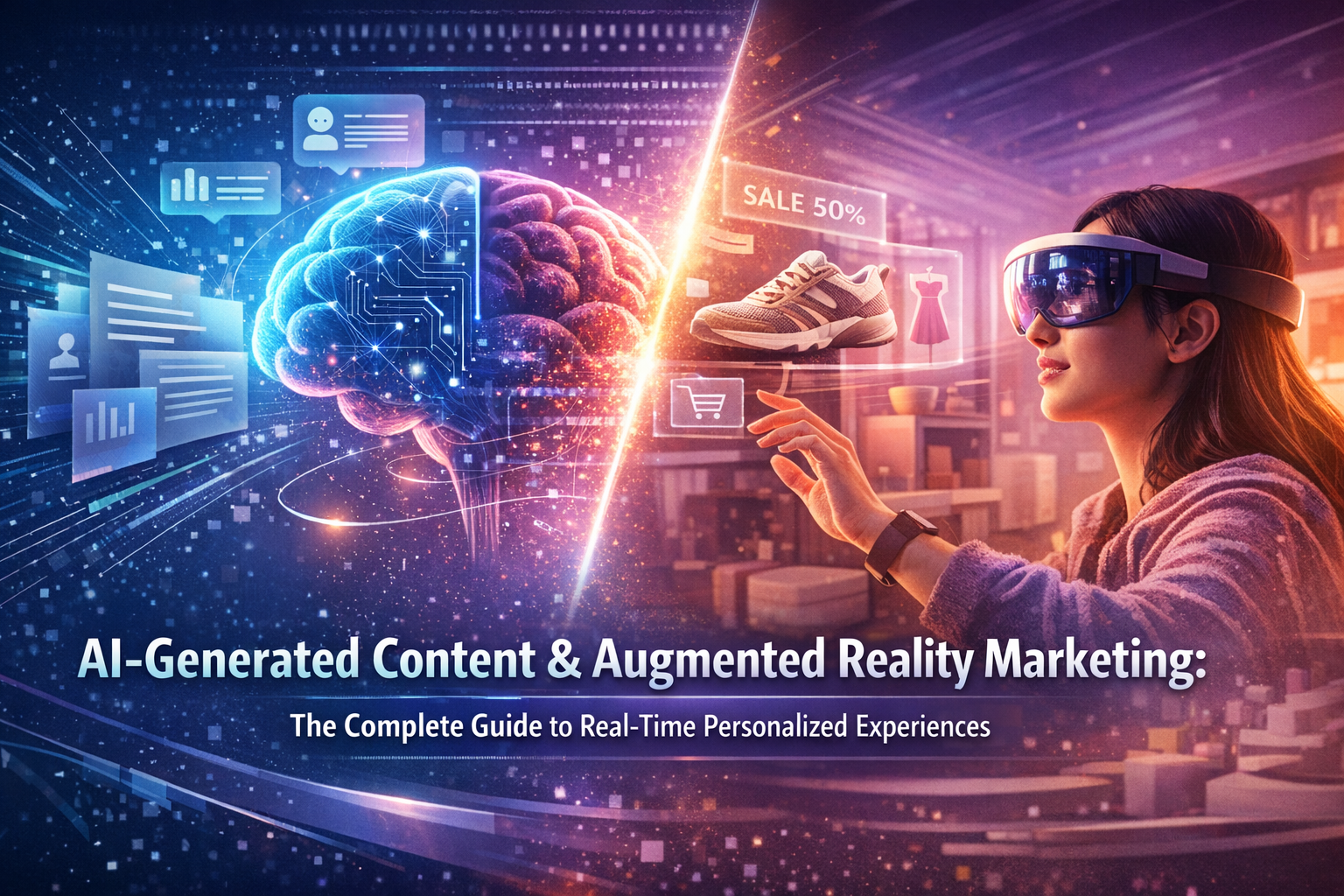
AI-Generated Content & Augmented Reality Marketing: The Complete Guide to Real-Time Personalized Experiences
Digital marketing is entering a new era where static content is no longer enough. Users expect websites to understand them, respond instantly, and create immersive experiences tailored to their behavior.
This shift is powered by two major technologies:
👉 AI-generated content
👉 Augmented reality in marketing
When combined, they create real-time personalized digital experiences that increase engagement, conversions, and long-term SEO performance.
This guide explains what they are, why they matter, and how businesses can start using them today.
The Evolution of Content Marketing: From Static to Adaptive
Traditional content marketing strategy treated every visitor the same. A blog post looked identical for all users. Landing pages didn’t adapt. Product recommendations were manual.
Modern users expect:
Personalized website content
Smart recommendations
Interactive exploration
Immersive digital experiences
Static content is being replaced by AI-driven adaptive marketing.
And this is not a trend — it’s the new baseline.
Businesses that fail to personalize risk losing attention in an increasingly competitive digital environment.
How AI-Generated Content Enables Real-Time Personalization
Most people associate AI-generated content with blog writing. But its true power lies in dynamic personalization.
AI allows websites to adapt content in real time based on:
User behavior
Location
browsing patterns
purchase history
device type
This leads to:
Dynamic landing page personalization
AI-powered chatbots
Behavior-based product recommendations
Personalized email campaigns
Smart content targeting
Practical Example
Two visitors land on the same website:
User A comes from a fitness blog → sees sports gear
User B comes from a fashion site → sees lifestyle apparel
Same page URL. Completely different experience.
This is AI personalization in action.
Benefits include:
Longer session duration
Higher engagement
Better conversion rates
Increased customer trust
Google interprets high engagement as quality, improving organic search performance.
The Role of Augmented Reality in Marketing
Augmented reality marketing transforms passive browsing into interactive exploration.
Instead of imagining a product, users can place it in their real environment.
Examples include:
AR product visualization
Virtual try-on tools
3D interactive demos
AR retail previews
Immersive brand storytelling
Why AR in eCommerce Works
Brands using AR shopping experiences report:
Higher engagement time
Reduced product returns
Increased purchase confidence
Stronger brand memory
More social sharing
AR reduces hesitation because customers can explore products before buying.
This leads to happier customers and stronger SEO signals.
Case Studies: Brands Already Winning with AI + AR
IKEA – AR Furniture Visualization
IKEA’s AR app lets users preview furniture in their homes before buying. This reduces uncertainty and return rates while increasing purchase confidence.
Sephora – Virtual Makeup Try-On
Sephora’s AR beauty tool allows customers to test products digitally. It improves engagement and drives higher online conversions.
Amazon – AI Personalization Engine
Amazon’s recommendation system dynamically adapts product displays for each user, increasing cross-sales and retention.
These companies prove that AI + AR marketing is not experimental — it’s profitable.
Where AI and AR Combine: The Future of Immersive Content
The next phase of immersive digital marketing happens when AI customizes AR experiences.
Imagine:
Personalized virtual stores
Adaptive AR ads
AI-powered interactive demos
Real-time immersive storytelling
Content is no longer consumed.
It’s experienced.
This is the direction modern marketing is heading.
Why Google Rewards Immersive Content Experiences
Google increasingly prioritizes:
User engagement signals
Time on page
Interaction depth
Helpful content quality
Experience-driven SEO metrics
AI + AR naturally improve these factors.
That makes immersive content a long-term SEO growth strategy, not just a marketing trend.
AI + AR Marketing Starter Checklist
You don’t need enterprise budgets to begin.
Start with small, practical steps:
✅ Install an AI chatbot
✅ Use dynamic website personalization tools
✅ Add simple AR product previews
✅ Launch personalized email automation
✅ Track engagement metrics
✅ Optimize based on behavior data
The goal is gradual adoption — not instant transformation.
FAQ:
What is AI-generated content in marketing?
AI-generated content refers to automated text, recommendations, or messaging that adapts based on user behavior. It allows businesses to personalize communication in real time.
How does augmented reality improve customer experience?
Augmented reality marketing allows customers to interact with products virtually, reducing uncertainty and increasing purchase confidence.
Is AI content good for SEO?
Yes — when used responsibly. AI improves personalization and engagement, which supports better user experience signals that Google values.
Can small businesses use AR marketing?
Yes. Many affordable AR tools exist that allow small brands to add interactive previews without large budgets.
Will AI replace marketers?
No. AI enhances marketers by automating repetitive tasks and enabling smarter personalization. Human strategy remains essential.
The Future of Digital Content Strategy
The future of marketing is not publishing more content.
It’s building smarter experiences.
AI brings intelligence.
AR brings immersion.
Together, they deliver personalization at scale.
Brands that adopt AI-powered content marketing and augmented reality engagement will not just attract attention — they will keep it.
And in today’s digital economy, attention is the most valuable currency.